
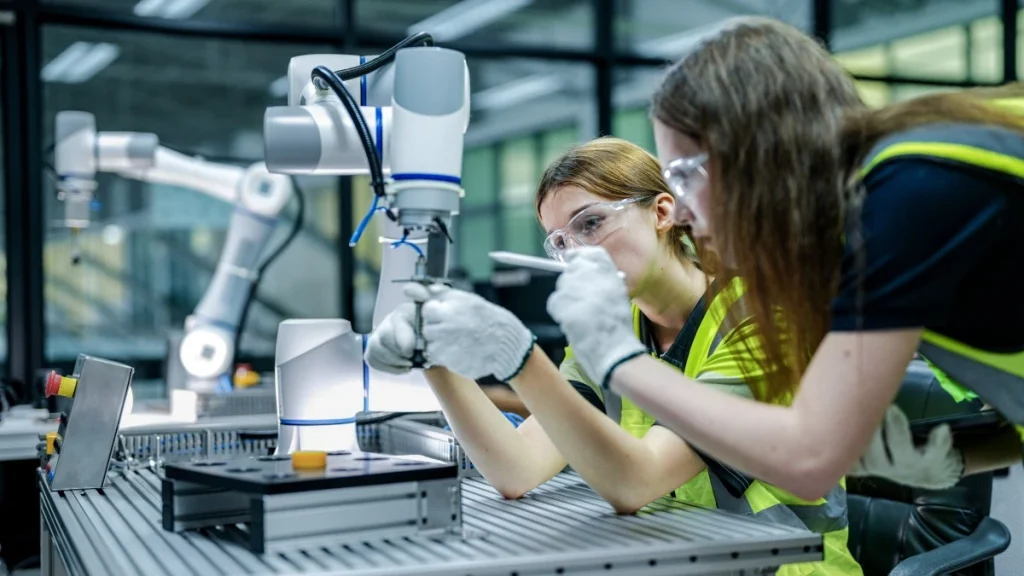
August, 2026. Artificial intelligence is reshaping advanced manufacturing environments, particularly in industries where quality, traceability, regulatory compliance and operational continuity are essential. Rather than functioning as a standalone technology, AI is turning into an integral part of how industrial organizations optimize processes, strengthen quality systems, and respond to complex production environments. In the manufacturing of medical devices, AI applications, such as predictive maintenance, machine vision, digital twin simulations, and data-driven quality control, are increasingly relevant because they can improve efficiency, reduce variability, and strengthen process visibility across production systems.
This shift is particularly relevant for sectors such as Medical Devices, Smart Manufacturing, and Semiconductors, where precision, traceability, and compliance are fundamental to every stage of production. As AI becomes deeply integrated into industrial processes, success depends not only on adopting new technologies, but also on operating in environments that provide the infrastructure, trained talent, controlled processes, data governance, and connectivity required to sustain digital transformation over time. This is especially important because AI adoption also introduces new requirements related to data integrity, explainability, cybersecurity, validation, risk management, and regulatory compliance.
AI as a Driver of Operational Efficiency
Across advanced industries, AI helps manufacturers improve the way operations are monitored and optimized. By processing large volumes of information in real time, intelligent technologies make it possible to anticipate maintenance needs, use resources more efficiently, identify process deviations, and strengthen production planning before challenges affect performance. Among the manufacturing industry, predictive maintenance systems can analyze sensor data to anticipate equipment failures, while machine learning can support real-time monitoring of production lines to reduce variability and improve consistency.
This shift to predictive manufacturing allows facilities to reduce disruptions, increase productivity, and respond with greater agility to changing production requirements. Beyond improving efficiency, AI provides a clearer understanding of how production systems perform, creating new opportunities for continuous improvement at the factory floor. For industrial parks serving high-value manufacturing sectors, Artificial Intelligence reinforces the importance of operating environments designed for continuity, process visibility, and long-term scalability.
Quality Systems Are Becoming More Predictive and Data-Driven
Quality management is also evolving through AI. By combining intelligent technologies with robotics, automation, and digital systems, manufacturers can strengthen traceability, improve process monitoring, and identify anomalies earlier in the production cycle. AI-enabled machine vision systems can inspect products at microscopic levels, detecting surface defects, alignment errors, or contamination that may be difficult to identify through manual inspection alone.
Rather than relying exclusively on traditional inspections, these capabilities enable a more proactive approach to quality by supporting continuous analysis throughout manufacturing. Earlier detection of potential deviations helps reinforce compliance while maintaining the consistency expected in highly regulated industries such as Medical Devices and Semiconductors. For these industries, quality assurance is directly connected to product safety, effectiveness, documentation, and regulatory compliance, which makes predictive and data-driven quality systems especially relevant.
At the same time, AI adoption in quality systems must remain aligned with regulatory expectations. Data integrity, auditability, model validation, transparency, and human oversight are essential to ensuring that intelligent systems strengthen compliance, instead of creating new operational risks.
This approach is already reflected across Coyol Free Zone. Examples from companies established at the Park demonstrate how AI, robotics, and digitalization are being integrated into manufacturing environments to improve productivity, strengthen quality processes, and support continued innovation.
Better Decisions Depend on Better Data
The value of AI extends far beyond automation. One of its greatest contributions is the ability to transform production data into meaningful insights that support faster and more informed decision-making.
Greater visibility in manufacturing systems allows organizations to identify emerging patterns, strengthen supply chain coordination, and respond to changing conditions using real-time data. By integrating information from multiple systems, decision-makers can gain a more complete view of operational performance and make faster, more informed decisions that support agility and long-term resilience.
As manufacturing environments become connected, access to reliable information is becoming a key differentiator. Integrating data from multiple systems provides a more complete understanding of production performance, helping manufacturers make decisions with greater precision while continuously improving their processes. However, the effectiveness of AI depends on the quality, availability, traceability, and governance of data. In smart manufacturing, these factors are essential because AI-enabled systems must operate within strict documentation, validation, and compliance requirements.
AI, Talent Development, and Workforce Training
AI adoption is also changing the skills required in advanced manufacturing environments. As production systems become more digital, connected, and data-driven, operators are expected to interact with automated equipment, digital work instructions, quality systems, data platforms, and intelligent tools that require technical understanding, process discipline, and analytical judgment.
In this context, training becomes a critical part of AI adoption. In highly regulated industries, operators must understand not only how to execute a task, but also how to follow validated procedures, maintain quality, document processes, identify deviations, and respond with precision. Research on AI adoption in advanced manufacturing identifies workforce training and skill development as one of the organizational challenges for implementation, including the need for specialized knowledge and training initiatives.
AI can also contribute to more effective training models. Digital simulations, intelligent learning tools, and data-based training environments can provide people with more interactive ways to understand production processes, practice responses to deviations, reinforce safety protocols, and follow standardized procedures. These tools can support more consistent experiences, while adapting the learning process to different skill levels and operational needs.
AI adoption reinforces the need for qualified professionals who can interpret information, apply judgment, and maintain accountability in critical processes. Human-in-the-loop frameworks are particularly relevant because they allow AI to enhance efficiency, while qualified professionals retain responsibility for compliance.
For Coyol Free Zone, this reinforces the strategic importance of talent as a core component of advanced manufacturing. The Park hosts 34 world-class companies operating under rigorous quality and operational requirements, generating 25,422 direct jobs as of January 2026. This pool of skilled talent creates a strong foundation for companies preparing their workforce for digital, data-driven, and regulated production environments.
Digital Transformation Requires the Right Industrial Environment
Successfully integrating AI involves much more than adopting new technologies. Digital transformation depends on industrial environments capable of supporting sophisticated production through specialized infrastructure, reliable connectivity, technical expertise, and services designed to meet the needs of advanced industries. This also means aligning innovation with regulatory frameworks and quality standards, such as FDA Quality System Regulation, EU-MDR, ISO 13485, and ISO 14971.
These conditions allow manufacturers to implement digital solutions, while maintaining business continuity, product quality, and the flexibility required to adapt to future technological developments. When these elements come together, innovation becomes part of everyday operations rather than a standalone initiative.
Coyol Free Zone reflects this approach by providing an environment designed to support technology-driven industries through specialized infrastructure, strategic connectivity, operational services, and access to skilled talent. These conditions enable companies to advance digital transformation while maintaining the standards expected by global markets.