
April, 2026. Sustainable infrastructure and buildings have become a defining element of industrial competitiveness worldwide. Environmental performance, resilience, and transparency do increasingly form part of how industrial platforms are evaluated within global value chains. In this context, LEED certifications represent one of the most recognized international benchmarks for responsible design, construction, and operational performance.
Developed by the U.S. Green Building Council, LEED (Leadership in Energy and Environmental Design) establishes a comprehensive framework to assess infrastructure and buildings in areas such as energy efficiency, water performance, materials selection, indoor environmental quality, and sustainable site planning. In 2025, LEED v5—the latest and most advanced version of the certification system— reinforced its emphasis on decarbonization, climate resilience, advanced energy systems, and environmental performance disclosure, aligning the certification with evolving global sustainability standards.
Beyond certification levels—Certified, Silver, Gold, and Platinum—LEED provides a structured methodology that supports measurable environmental outcomes and long-term operational efficiency.
For companies operating in highly regulated industries—such as Medical Devices, Semiconductors and Advanced Manufacturing— LEED-certified buildings support compliance and environmental performance monitoring aligned with sustainability requirements.
LEED-Certified Buildings at Coyol Free Zone
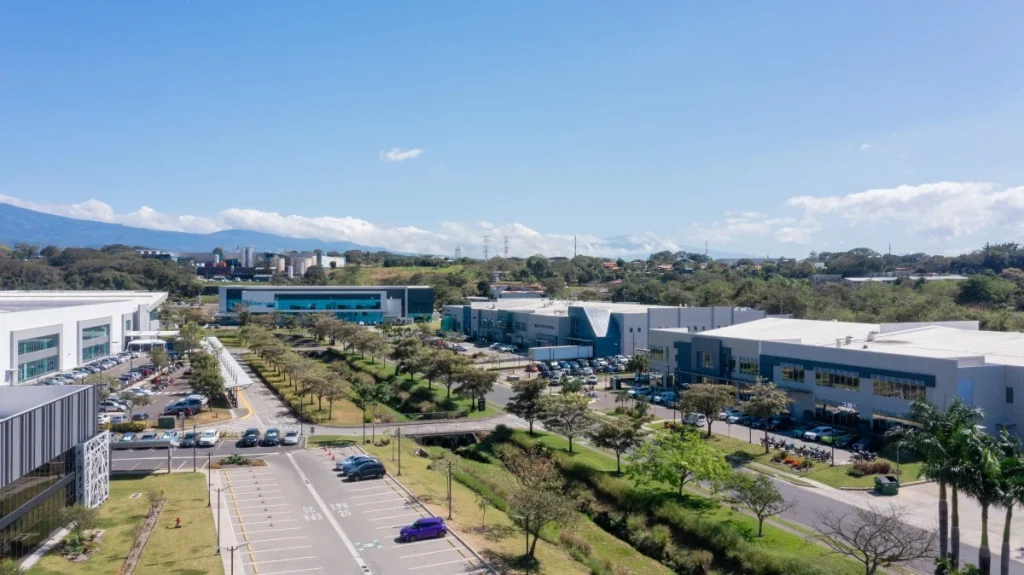
At Coyol Free Zone, sustainable construction is embedded into our development model, forming part of a comprehensive vision for industrial growth. To date, the Park has developed over 100,000 square meters of LEED-certified buildings, thus reflecting a progressive adoption of international sustainability standards across its footprint.
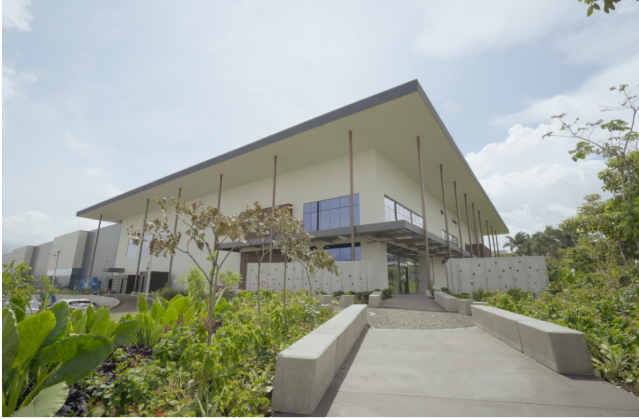
Establishment Labs B23 Sulàyöm Innovation Campus.
This milestone reflects a long-term strategy in which environmental criteria are incorporated from the earliest stages of planning, design, and construction of buildings, ensuring alignment with global standards required by companies operating in compliance driven industries.
As a developer of industrial Real Estate solutions, Coyol Free Zone has built a portfolio of nine LEED-certified buildings designed to support the operational and regulatory needs of each of these companies at the Park.
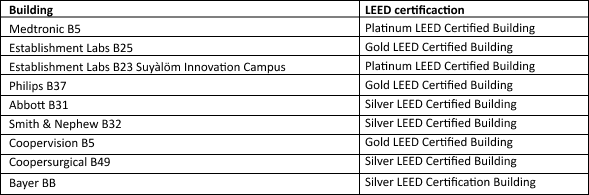
Note: Certification levels correspond to internationally recognized LEED standards.
This portfolio reflects a consistent, forward-looking approach to high-performance building development, where sustainability standards are strategically embedded into both operations and the specific needs of companies. As a result, these buildings are conceived as state-of-the-art facilities that seamlessly integrate efficiency, environmental performance, and operational reliability into a single, comprehensive solution, tailored to the requirements of highly regulated industries.
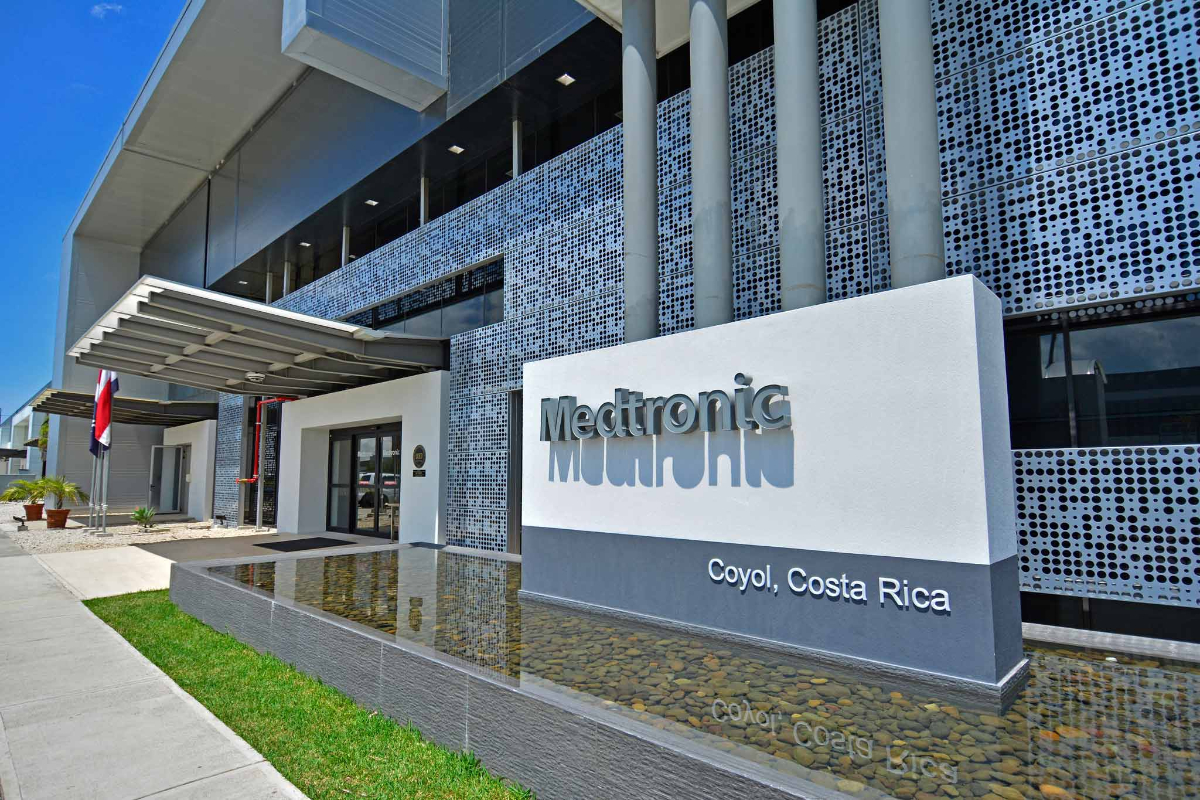
Medtronic B5
From Certification to Business Value
For companies operating within Coyol Free Zone, LEED-certified buildings are an integral part of how their operations are structured and scaled. These environments are designed to support highly specialized processes, enabling companies to operate within spaces that respond to the technical and sustainability goals of their industries.
As global industries continue to evolve, the role of industrial buildings has shifted from a purely operational asset to a strategic enabler of growth, precision, and long-term operational reliability. By consistently delivering high-performance buildings aligned with the needs of specialized industries, we contribute to shaping a business environment where companies can operate with confidence while continuously advancing their capabilities.
Through this model, Coyol Free Zone continues to set the standard for industrial development in the region reinforcing our position as a business hub that drives the growth of next-generation industries and their integration into increasingly sophisticated global value chains. This approach not only strengthens the operational capabilities of companies established in the Park, but also contributes to the generation of quality employment, the adoption of advanced sustainability standards, and the long-term competitiveness of Costa Rica within the global Life Sciences and Smart Manufacturing landscape.